
About Me and My Approach
Douglas L. Cohen, Ph.D., Psychotherapist in Washington, DC
 I am a psychologist with over 40 years experience in group, individual and couples psychotherapy. My patients are “normal” women and men with self-worth and relationship issues that get in the way of having richer, more fulfilling lives. Their issues may make it difficult to build and maintain an intimate, supportive and vibrant relationship with significant others. These issues are likely to also affect their ability to be successful in parenting and career.
New patients are often surprised to find they are better able to talk with me about very personal issues than they had expected. I am sensitive, empathetic and, in general, an easy person with whom to talk.
Understanding the source of our problems is necessary but insufficient for change. Lasting change requires not only insight but also the motivation or “heat” that is required to make change happen. When it comes to making major changes in how we live, all of us are ambivalent to some degree. The healthier part of us may want to change but the more afraid, resistant or defended part of us wants to stay with what has been familiar. I will work with you to identify the sources of your resistance and find the “heat” within you to make lasting change.
Compared to most therapists, I am more active, connected and personal in therapy. I do not just sit back and listen. I help to generate “heat” by giving honest, direct feedback which confronts the patient about their attitude or behavior. For example, in couples therapy, I might say, “While I understand you feel badly treated by your spouse, the way you are responding is making it worse. Your defensiveness only serves to alienate your spouse more. If I was your spouse, I would feel like retreating rather than listening. Now, what if you tried responding in a more vulnerable, less defensive manner that invites your spouse to hear you?” Some therapists are always supportive and “on your side.” which sounds nice but in my opinion it is not what most of us need. If you need to make changes in your life, I believe it is essential to have a therapist who is willing to tell you what you are doing wrong in addition to what you are doing right. (See the Washington Post article, “Why I Fired My Therapists” on my Resources page).
Relating to others in an effective way seems like something that should be natural to humans but it is not. It must be learned. One of the reasons humans have so many problems relating and coping is that we have very few instincts that instruct us in how to relate and cope effectively. In contrast, dogs instinctively know how to choose a good mate, raise their pups, care for a wound, etc.. In place of instincts, human beings learn our way of behaving in relationships through modeling or direct teaching by our parents and other caretakers. To be our best selves, we need to unlearn some of our ineffective habits in relationships and learn more effective strategies. For example, the only time I saw my father cry was when a family dog died. He did not know how to be vulnerable and truly intimate with another person. By the time I was four or five, I had learned not to cry and to hide my vulnerability. Much later I learned that crying was a helpful emotional release and that vulnerability created an opportunity for others to connect and care about me. A major part of my psychotherapy was unlearning the ineffective habits I learned from my parents and learning new ways to relate. Before you get the wrong impression, my parents were good people who had no conscious intention of teaching me ineffective behaviors. Everything they did wrong with me was something their own parents had done wrong with them or something they never learned. Like most parents, they were unaware of what they were passing on to me. I do not blame them for anything they did or did not do with me.
My approach to therapy reflects my belief as an athlete that success in an endeavor requires pushing ourselves to overcome our limitations and problems. Lasting change requires commitment and motivation. To identify a patient’s problems and help them change, I may use the relationship between myself and the patient as a teaching tool. I may share a story from my own life to illustrate something I want to teach a patient. For example, I have shared the way I confronted my father for not being willing to say “I love you” and how that led to a huge change in our relationship. Being willing to share my some of my own struggles in relationships has proven to be one of the most effective ways for me to teach and motivate patients as they work on their own struggles. It also helps the patient feel less alone and builds trust in our relationship.
Most women choose to work with a female therapist and most men choose to work with a male therapist but sometimes it is better to have someone of the opposite sex. Working with a male therapist offers women the opportunity to use the therapist-patient relationship to work on past and present relationship issues with men. Women who have issues with their spouse, father, male siblings and/or coworkers have the opportunity to work on those issues. It is helpful for women to have the viewpoint of an emotionally healthy male to compare to the other men in their life. The trust and understanding that develops in the therapist-patient relationship can be instrumental in helping women to be able to better trust the men in their lives.
About Me
 |
 |
I’ve always had a wide range of passions and interests. I’m an avid scuba diver and nature photographer. Sports and physical fitness have been a big part of my life since I was eight years old. I played Lacrosse for Dartmouth College, and wrestled in high school. I coached boys’ lacrosse for a number of years and created a workshop for coaches entitled, “Strong and Caring Coaching: Raising Boys to Be Good Men”. The workshop addressed the emotional needs of youth players and identified the ways a coach can have negative and/or positive effects on players.
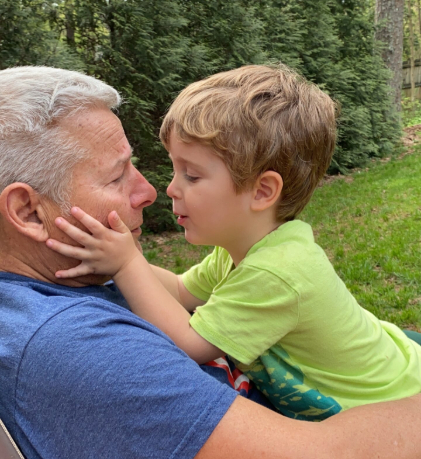
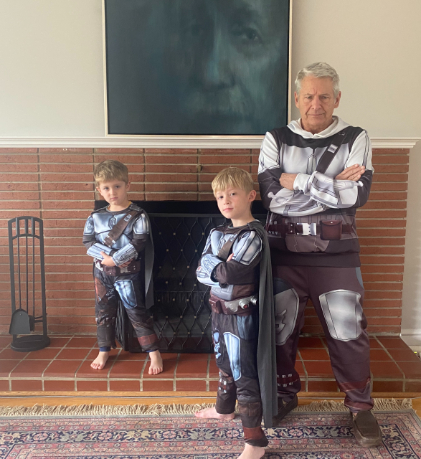
I am fortunate to have a close family including two precious grandchildren with whom I am very close. We wear costumes and battle bad guys “to save the day!” It is a wonderful “replay” of the joy of raising my son who is now 40 years old. I enjoy being creative which includes making costumes, large cardboard submarines, woodwork and stained glass. A life-long dog lover, I enjoy training my Golden Retrievers. Athena has learned to dive to the bottom of a pool to retrieve lacrosse balls. Mando who is younger has made it down to the pool’s fourth step and should make it to the bottom soon. I also volunteer regularly with organizations which protect ocean life or provide training to therapists in crisis (Ukraine 2022).
Training
I earned a doctorate in Counseling Psychology and a masters in Clinical Psychology.
A partial list of my early experience and training includes:
- Psychologist, Gallaudet University Counseling Center
- Psychology Intern, Saint Elizabeths Hospital
- Director of Day Treatment Program, Fitchburg Community Mental Health Center
- Consultant and Supervisor for Counseling Staff at Pennsylvania School for the Deaf
I currently spend an average of three weeks a year in advanced training.
Professional Membership
President, American Academy of Psychotherapists 2016 – 2018
Member, American Academy of Psychotherapists, 1990 – Present
Fellow, American Academy of Psychotherapists, 2023 – Present

“Up Close and Personal” by Doug Cohen
Next Steps:
Email me at info@douglaslcohenphd.com or call 202-368-2852 for an initial consult session.
Recommended in Washingtonian Magazine:
“Making Love Last and Who to Call When it Doesn’t”

Past President and Fellow
American Academy of Psychotherapists

Verified by Psychology Today